Offshore and Marine Scaffolding: Corrosion Resistance and Safety Standards
- General

Choosing between traditional tube and fitting and modular system scaffolding comes down to a direct trade-off between architectural flexibility and assembly speed. Traditional tube and fitting provides infinite three-dimensional customisation, making it the superior option for complex geometries and highly congested Industrial or Oil & Gas plants. Conversely, prefabricated system scaffolding is the clear choice for fast-track Construction builds, linear Rail infrastructure, and large-scale Marine shipyard projects. By utilising prefabricated node connections and captive steel decks, modular systems achieve up to 50% faster erection times with smaller crews, offsetting their higher equipment price through substantial labour savings.
Both methodologies satisfy UK temporary works legislation, complying with the structural performance requirements of BS EN 12811-1 alongside BS EN 12810 for prefabricated façade access. Selecting the right solution requires weighing your site geometry, schedule constraints, and total operational costs. Whether your project demands the three-dimensional adaptability of traditional scaffolding or the rapid turnaround of high-efficiency system scaffolding, understanding the core differences between these two systems ensures your temporary works remain profitable, on schedule, and fully compliant with UK safety standards.
Connection mechanics dictate both your timeline and your squad requirements on site.
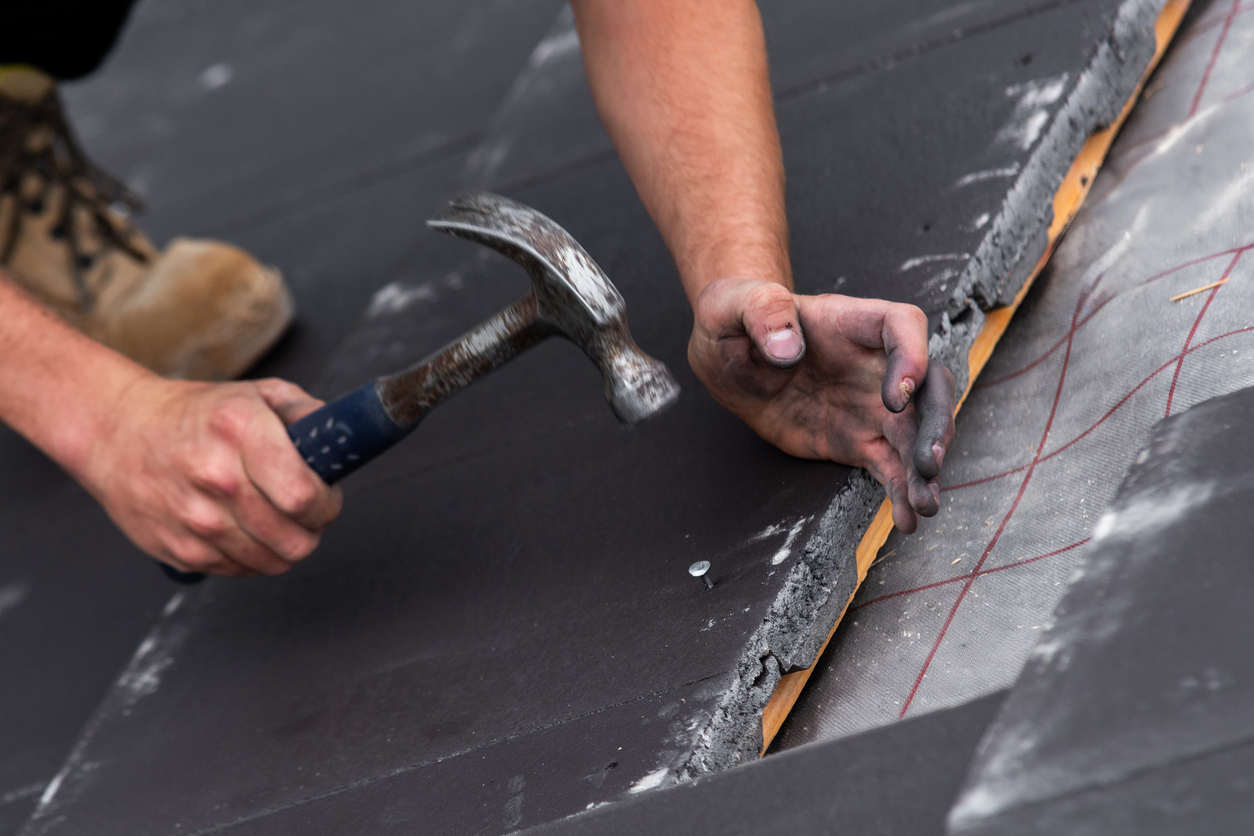
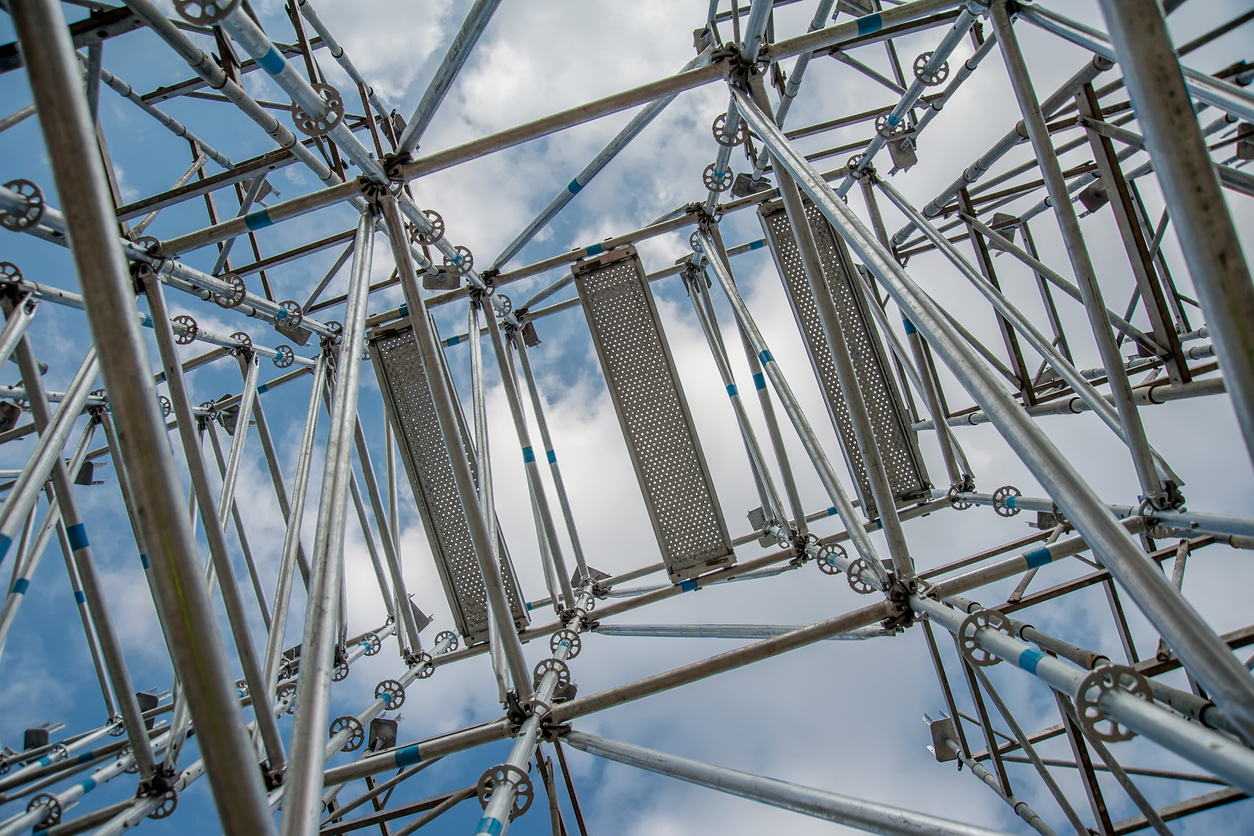
System scaffolding is engineered for rapid build cycles. Vertical standards feature pre-welded node points at set 500mm intervals. Ledgers, transoms, and braces drop into place and lock securely with a few firm strikes from a scaffolding hammer. Because the components self-align without manual measuring, smaller gangs can build and strike 30% to 50% faster on straightforward facades.
Traditional tube and fitting is far more labour-intensive. Every joint requires manually positioning loose tubes, seating individual couplers, checking levels, and torquing T-bolts to 50 Nm with manual scaffolding tools. This hands-on process demands larger, more experienced squads, adding significant labour hours when working on standard, repetitive elevations.
Where modular systems prioritise speed on straight runs, traditional tube and fitting rules complex geometry.
Loose tubes and friction couplers give you total three-dimensional freedom. Scaffolders can cut tubes to exact lengths, overlap ledgers, and clamp fittings at any angle. That flexibility makes traditional scaffolding the industry standard for wrapping curved heritage facades, threading around dense plant pipework, or hanging cantilevered drop rigs in restricted spaces.
System scaffolding is locked into fixed bay lengths (typically 1.5m to 3.0m) and predetermined node heights. When an elevation presents sharp angles, deep reveals, or irregular floor steps, modular bays cannot simply be adjusted on the fly. Bridging those awkward profiles usually requires specialised factory adapters or hybrid tube-and-fitting infills, eroding some of the speed advantages system scaffolding brings to the job.
Managing equipment off the rig has a major impact on your depot overheads and site turnaround times.
System scaffolding streamlines logistics using larger, dedicated components. Steel decks, standards, and ledgers pack cleanly into purpose-built steel stillages, making kit straightforward to transport, crane-lift, and audit. Because the components are bulky and clearly identifiable, you deal with far less equipment shrinkage, theft, or fittings getting trampled into the mud on busy commercial sites.
Traditional tube and fitting carries a heavier logistics footprint. A standard build relies on thousands of loose fittings. Including right-angle couplers, swivels, and baseplates from our scaffold fixings range, alongside individual timber boards. Bagging, loading, and sorting these small components demands substantial yard labour, and loose fittings frequently go missing over extended hire cycles.
Fall prevention and platform stability come down to how much your setup relies on individual worker discipline versus engineered fail-safes.
System scaffolding builds safety directly into the components. Most modular systems incorporate advance guardrail (AGR) options, allowing scaffolders to set up perimeter handrails from the safety of the lift below before ever stepping out onto the deck, making compliance with NASC SG4 guidance straightforward. In addition, captive steel decks lock down directly into the transom profiles, eliminating board displacement, wind uplift, and trip hazards without needing extra hardware.
Traditional tube and fitting places far more responsibility on operative attention to detail. Every single guardrail must be manually measured, levelled, and clamped into place. Timber decks must be laid individually, inspected for splits, and firmly lashed or anchored using board clips from our scaffolding accessories range to stop uplift in bad weather.
While an experienced gang can build a traditional structure that is just as secure as a modular one, system scaffolding drastically reduces the margin for human error on site. Its pre-set dimensions and locked-in components make quality control far simpler for temporary works coordinators and site inspectors to sign off with confidence.
Looking strictly at the equipment invoice rarely tells the complete financial story of a scaffolding package.
Traditional tube, fittings, and timber boards have a significantly lower initial purchase price and lower weekly hire rates per tonne. For long-term, static projects where the rig sits in place for months with minimal alterations, such as major structural refits, traditional gear keeps costs and capital outlay low.
System scaffolding commands a higher upfront cost, whether through scaffolding sales or higher weekly rates via scaffolding hire. However, it quickly recoups that investment on fast-track jobs. Slashing erection hours, reducing gang sizes, and hitting tight handover dates generates on-site labour savings that regularly outpace the higher equipment cost.
There is no one-size-fits-all answer when deciding between traditional tube and fitting and modular system scaffolding. The right choice always comes down to the geometry in front of you, the skill set of your squad, and the urgency of your handover deadline.
Go with system scaffolding when you have long, straight commercial runs, tight programme timelines, and want to keep daily labour squads lean and productive. Turn to traditional tube and fitting when you are tackling awkward industrial pipe racks, heritage facades, curved elevations, or long-term static hires where keeping kit hire rates low is the top priority.
Whichever route your project demands, George Roberts Ltd backs your team with over £27m in stock, dedicated technical engineering support, and nationwide 48-hour delivery across the UK.
Q: Can you combine traditional tube and fitting with system scaffolding on the same project?
A: Absolutely. Hybrid scaffolds are very common on UK sites. Contractors frequently deploy modular system scaffolding across the main, repetitive elevations to capitalise on rapid build speeds, then use traditional tube and fitting to navigate tricky corners, recessed balconies, splay walls, or complex service pipework.
Q: Is system scaffolding inherently safer than traditional scaffolding under UK regulations?
A: Both methods are fully compliant with UK Health and Safety legislation and the Work at Height Regulations 2005 when built to code. However, system scaffolding significantly reduces the risk of human error. With captive non-slip steel decks, fixed node points, and advance guardrail (AGR) systems that align naturally with NASC SG4 guidance, system scaffolding provides engineered fail-safes that don’t rely solely on manual coupler placement.
Q: Which option is more cost-effective for short-term commercial projects?
A: Modular system scaffolding is almost always the more economical choice for fast-track, short-term commercial builds. While the raw hire rate per component may be slightly higher than loose tubes and boards, reducing erection and dismantling hours by up to 50% slashes your labour bill and ensures handover milestones are met on schedule.
Meta description – Traditional tube and fitting vs modular system scaffolding: Compare build speeds, labour costs, and geometric versatility to choose the right rig with GR+
The British Standard for scaffolding is not a single document, but an interconnected suite of British and European ...

A properly fitted scaffold belt is critical on site because it directly balances height safety compliance with absolute ...

Protecting your equipment, posture, and site compliance on every lift While a leather scaffold frog is one of ...
Please select the List you wish to add to.