What Kind Of Hammers Do Scaffolders Use?
- Scaffolding
- General
Please note we will be closed Friday the 30ᵗʰ of October for our annual Stock Take. We will reopen Monday 2nd of November.
We will still deliver on Friday 30ᵗʰ of October but our depot will be closed for Collections. We will not deliver Monday 2nd November but you will be able to collect.

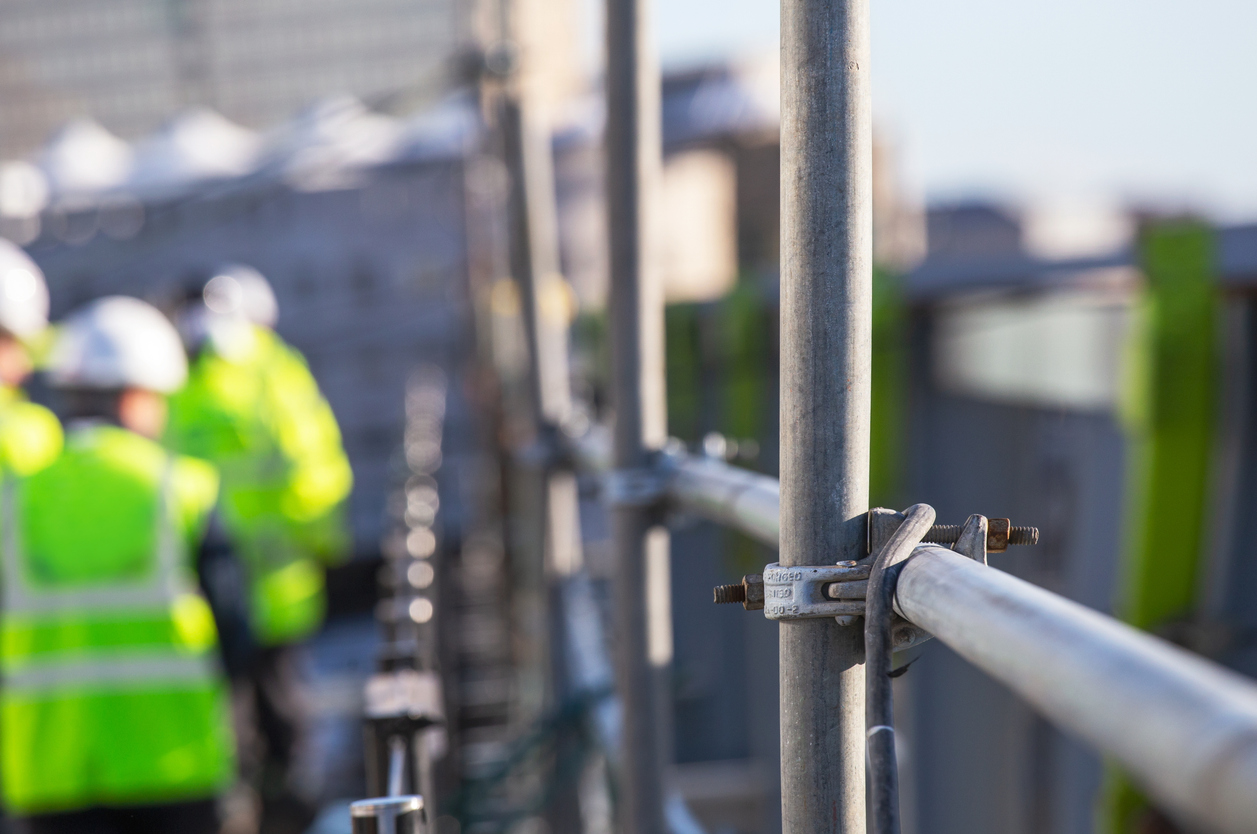
When it comes to erecting a safe and compliant scaffolding structure, the devil is in the details. To the untrained eye, the heavy metal clamps holding the steel scaffold tubes together might all look the same. However, confusing your scaffolding components can lead to catastrophic structural failures.
The two most common scaffold fixings you will encounter on a site are single scaffold couplers and double scaffold couplers. While they share a similar 90-degree angle, they serve completely different structural purposes.
The core difference comes down to one crucial factor: load-bearing capacity. Double couplers are designed to carry heavy vertical loads and hold the core structure together, whereas single couplers are strictly non-load-bearing clamps used to secure the boards you walk on.
Here is everything you need to know to safely distinguish between the two.
A single scaffold coupler, commonly referred to in the industry as a putlog coupler, half lap, or simply a “single”—is a lighter-duty clamp. Visually, it looks like half of a double coupler. It features a single wraparound clamp on one side, and a specialized shaped lip (or blade) on the other.
Its primary function in scaffolding is to connect putlogs or transoms (the horizontal tubes that support the wooden scaffolding boards) to the ledgers (the main horizontal tubes running the length of the scaffold).
The key limitation to remember on site is that single couplers are not load-bearing. They are designed purely to stop the putlog tubes from sliding horizontally or being accidentally lifted. Because they do not wrap fully around both tubes, they do not have the slip-resistance required to safely support heavy vertical weight.
A double scaffold coupler, also known as a right-angle coupler or a “double”—is the heavy-duty workhorse of any scaffolding structure. Visually, it is significantly bulkier than a single coupler. It consists of two complete, wraparound clamps joined back-to-back at a fixed 90-degree angle.
The primary function of a double coupler is to connect the standards (the vertical, upright tubes) to the ledgers (the main horizontal tubes). Together, these tubes and couplers create the primary, weight-bearing skeleton of the scaffold.
Its key strength lies in the fact that double couplers are fully load-bearing. Because they wrap entirely around both intersecting tubes and are tightened with significant torque, they provide immense slip resistance. They act as the vital structural joints that safely transfer the weight of workers, materials, and the scaffold itself straight down to the ground.
The single biggest mistake made by inexperienced builders or DIYers is using a single coupler where a double coupler is structurally required. Because single couplers are cheaper, lighter, and slightly faster to install, it can be tempting to use them to secure ledgers to standards. Never do this. A single coupler lacks the necessary clamping force to prevent a vertical tube from slipping under pressure. If weight is applied to a scaffold where singles have been used on the main structural frame, the entire tower is at risk of sliding and collapsing.
Conversely, using double couplers where single couplers belong (to hold down putlogs) isn’t inherently dangerous, but it is highly inefficient. It unnecessarily increases the overall weight of the scaffold, slows down the assembly time, and wastes your more expensive, load-bearing inventory on a simple task.
Because scaffolding fittings look so similar, several misconceptions have circulated over the years. Let’s clear up a few of the most common myths.
Myth 1: You can use single couplers to build a scaffold if you use enough of them. Fact: Quantity does not overrule physics. Single couplers completely lack the structural design required for vertical slip resistance. No matter how many single couplers you stack on a joint, they will never safely support the vertical load of a scaffolding tower the way a double coupler does.
Myth 2: Double couplers are always better, so I should only buy those. Fact: While double couplers are unquestionably stronger, using them for every single joint is a massive waste of resources. Using double couplers to hold down non-load-bearing putlogs simply adds unnecessary weight to the structure, exhausts your builders faster, and ties up your expensive heavy-duty fittings on a job that a lighter, cheaper putlog coupler was specifically designed to do.
Myth 3: Single and double couplers require the same amount of tightening. Fact: Because double couplers bear the structural weight of the tower, they must be tightened to specific torque standards (typically using a specialized scaffolding spanner) to guarantee slip resistance. Single couplers, on the other hand, only need to be tightened enough to secure the board supports firmly in place without rattling or sliding.
Myth 4: Pressed steel and drop-forged couplers act exactly the same. Fact: You will often see both singles, doubles, and swivel couplers sold in “pressed steel” and “drop-forged” variations. While both types must pass strict BS EN safety standards to be sold, they are not identical. Drop-forged couplers are shaped from solid, heated metal, making them incredibly durable and resistant to long-term wear and tear. Pressed steel couplers are stamped from heavy sheet metal; they are highly capable and lighter to handle, but typically have a shorter lifespan on rugged job sites.
Understanding the difference between single and double scaffold couplers is Scaffolding 101. Remember the golden rule: Doubles build the frame; singles support the boards.
Always ensure your team is using the right fitting for the right joint, and regularly inspect your couplers for thread wear, rust, and distortion to ensure they can perform safely under pressure.If you need to stock up on reliable, BS EN-certified components, view the comprehensive range of General Scaffold Products available at GR+ by George Roberts. With over 30 years of industry experience, we supply the highest quality drop-forged and pressed steel fittings to keep your site safe and fully compliant.
A properly fitted scaffold belt is critical on site because it directly balances height safety compliance with absolute ...

Protecting your equipment, posture, and site compliance on every lift While a leather scaffold frog is one of ...

Understanding the cornerstone of every professional scaffolder’s tool belt On any active UK construction or civil engineering site, ...
Please select the List you wish to add to.